
Upscale, Upscale & Away – Some Thoughts on Nvidia’s DLSS 5
Fake frames. Fake games… or is it?
Upscaling technology has come a long way since its first Iteration in late 2018 as Nvidia’s ‘DLSS 1.0’. Today, with the latest transformer model, 4.5L by Nvidia, if you have the hardware to utilise it, you can take advantage of some pretty impressive tech, and it’s not just Nvidia who are pushing this. AMD are not far behind themselves with their FSR 4, Intel with XeSS. We also have independent developers making their own iterations such as “lossless scaling”. But with all these new technologies, are they becoming the bane of gaming? As games become more technologically advanced, can upscaling technology help balance the costs of hardware vs. the demand of the consumer?
The Industry leader
Nvidia set the ball rolling with gaming upscaling back in late 2018. DLSS was promised to do more with less, with all the bells and whistles it came with. Fast forward to today, and with their latest version, we’re really able to push the graphical envelope. Not only that, but we also have frame generation working in tandem. Magical AI tech produces fake frames in between real ones, so that game running at 60fps can now run at maybe two, three, or four times that.
AMD came long with their own version, FSR, which is currently at version 4.0. There are others, such as XeSS by Intel, but the real usage is between AMD and Nvidia. A lot of it comes down to a matter of taste, but more importantly, how big your wallet is.
As with most things, there is a catch with this tech. You need the hardware to make the most of it. If you want to use Nvidia’s latest and greatest to its full extent, you need a 5 series card, and these are not cheap. For AMD, you need a 9000 series to use their FSR 4. Even then you are plagued with issues such as “ghosting”, where the image can look blurry from frame-generation or input lag from all those fake frames doing their thing.
What does all this mean for the future of gaming?
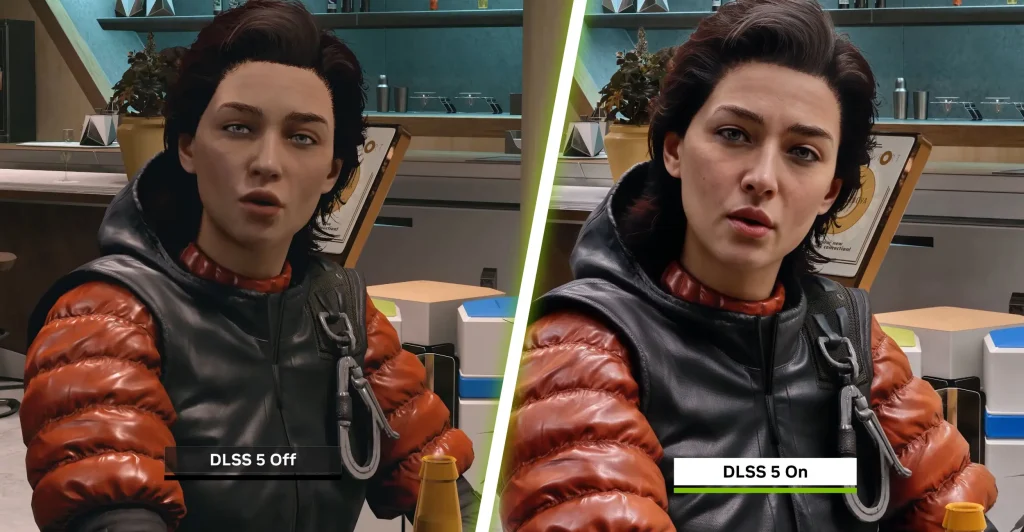
So for the most part, all this sounds great, right? You can play better-looking games, and you don’t need to worry about raw computing power anymore. But the winds have seemingly changed ever since Nvidia recently showcased its DLSS 5.0, which is set to be available by the end of this year. “AI Slop” is a term you will see a lot commented on the trailers, reminiscent of some of those mobile game ads you see. The main issue comes with how far it goes in improving the image. Some of the supported games on day one, such as Starfield and Resident Evil: Requiem, look to lose their art direction and “soul”. We’ve moved on from fake frames and sharper images and we’re now just applying a seemingly generative AI filter. The kickback was so significant, even the CEO of Nvidia, Jensen Huang, chimed in, saying, “gamers are completely wrong” about this new technology. Many are left to be convinced.
What next then?
When the PlayStation 5 and XBOX Series X dropped, I always remembered seeing those certain marketing catchphrases all over the box. “8K, 4K 120” & “4K 120FPS” in big gold writing. These few words created expectations that the hardware could not meet natively. Sure, they can output at 8K, but you are not playing Demon’s Souls natively at 8K. They were technically true, but culturally damaging.
Platform holders marketed a fantasy that distorted expectations, which in turn created a demand from the players for almost impossible standards. The devs and publishers needed a way to meet those same standards without going bankrupt. Upscaling is the outcome of an impossible scenario. Sony themselves have recently introduced their own upscaling, PSSR for the PlayStation 5. This isn’t tech that is being limited to the PC market.
The irony from all this is the damage that the AI industry has had as a whole on gaming, from RAM price increases of 200% and SSD drives almost doubling. AI upscaling may just be the antihero of gaming.